McFarland Books
McFarland has published nonfiction from the mountains of North Carolina since 1979, and its website sells about 8,000 of those books. In 2025 GruffyGoat moved the store onto our hosting, designed and built a new one on a custom WordPress and WooCommerce theme, and stayed on to keep it running.
- Custom Integrations
- E-Commerce
- Inventory & Listings
- Retail & E-commerce
- Hosting, Maintenance & Support
- Website Design
- Website Development
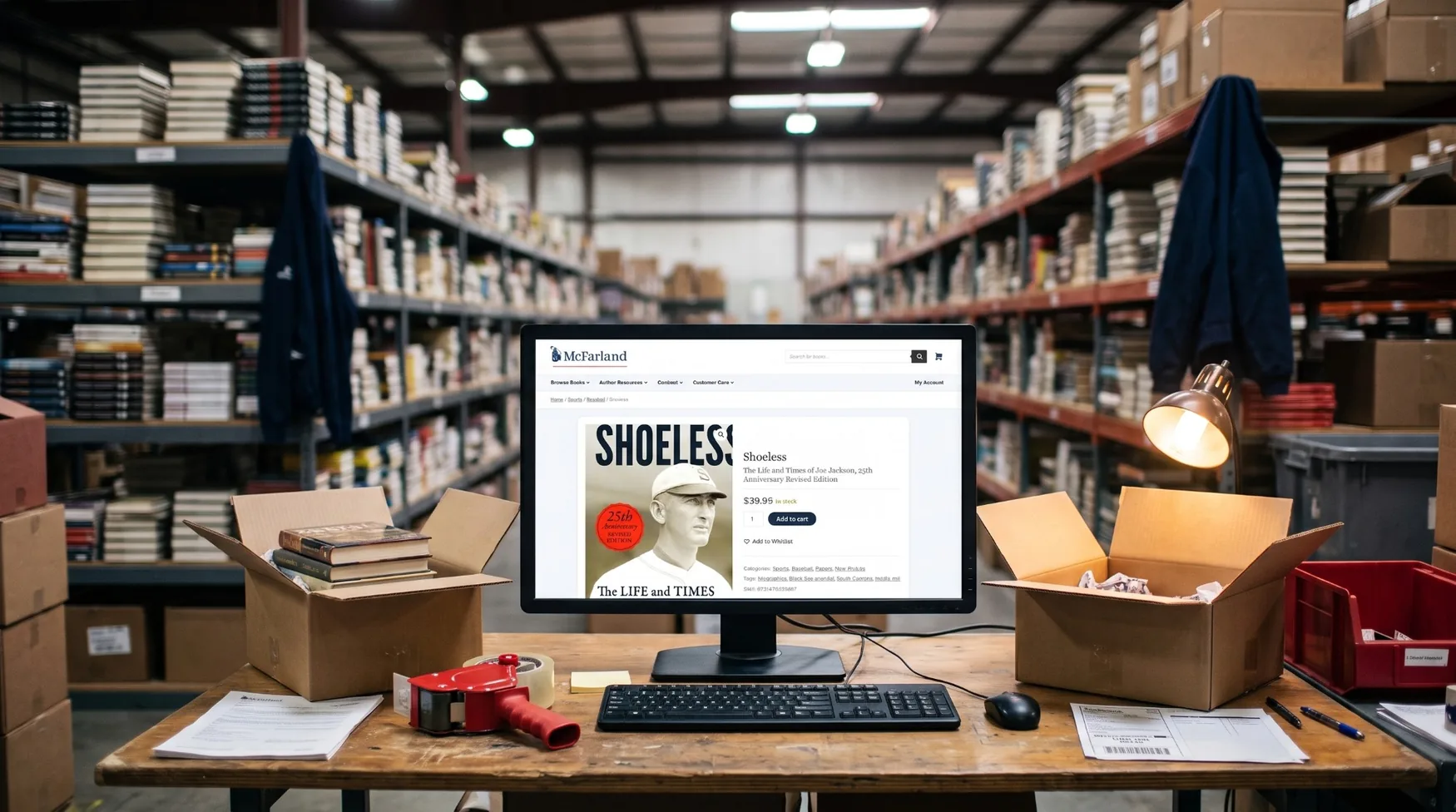
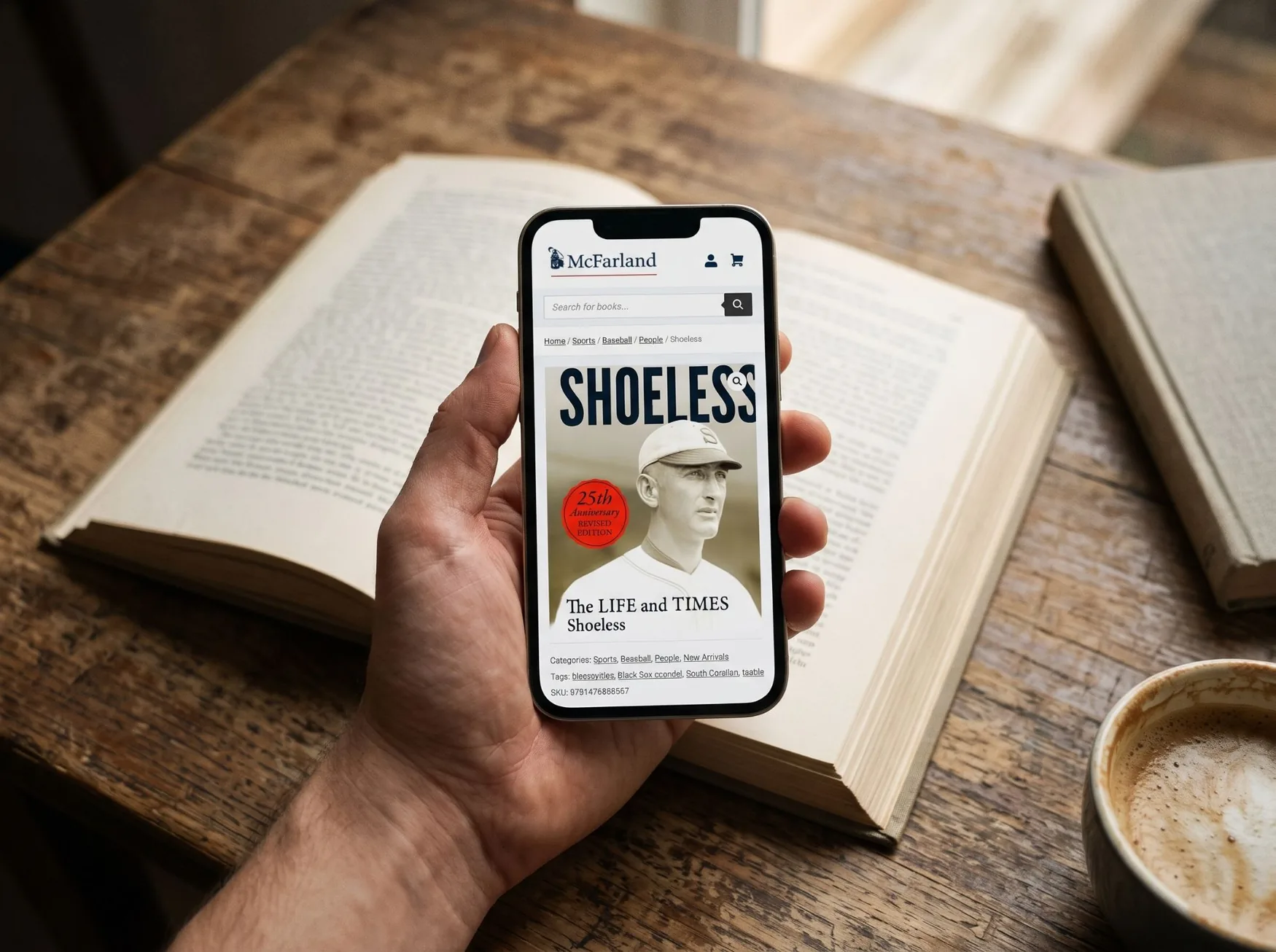
A New Storefront for 8,000 Books: GruffyGoat + McFarland
McFarland & Company is an independent publisher in Jefferson, North Carolina. Founded in 1979, it is known for taking popular culture seriously, with a catalog that runs from baseball and chess to military history and horror film. About 8,000 titles are for sale, and roughly 270 new ones arrive every year.
The website carries a lot of that weight. Readers, libraries and booksellers buy there. Authors use it to prepare and deliver their manuscripts. Every order is pulled into McFarland’s in-house sales software, and stock and prices sync out to its seller accounts on Amazon and Walmart. If the site stalls, more than a storefront stalls with it.
When Karl-Heinz Roseman, McFarland’s VP of Sales and Marketing, came to us in the spring of 2025, the store was a working WooCommerce site that had been added to for years. A stock theme with a stack of add-ons. About 40 plugins. More than 14 GB of files and a long trail of old redirects. Nothing was on fire. They wanted a fresh look, and they wanted someone watching everything running behind it.
Here is what the work has produced so far:
- A new design on a custom WordPress theme built for a book catalog, with browsing by subject, imprint and series, and badges for titles announced months before release.
- A move onto our hosting, planned from an audit of the old site’s traffic and plugins before we touched anything.
- Orders that still flow into McFarland’s sales software and listings that still sync to Amazon and Walmart. Those were the two connections that could not break.
- PCI compliance for a new payment processor, passed two days after McFarland approved the work, and passed again at both rescans since.
- A monthly newsletter template that matches the new site, built in the same WordPress install as the store.
Rebuilding a Store That Could Not Close
The order of the work mattered. We started with the audit, then moved a copy of the store to our servers so our developer could build against the real catalog while the live site kept taking orders. The new site launched in the middle of August 2025.
The first few weeks were bumpy, and it is worth saying so. Real traffic was heavier than the plan allowed for. Then a wave of bots started hitting the add-to-cart links, and book pages slowed to a crawl. We moved the site to a larger server, blocked the sources, and watched it for a week before we closed the ticket. A sorting option for upcoming titles stopped working around the move and was fixed by the next afternoon. The logo went missing in Firefox, which two of McFarland’s senior managers happen to use, and it was back in under two hours.
None of that is unusual for a store this size changing hosts and themes at once. What matters is how quickly it gets handled, and whether the client hears about it from us first.
What the Partnership Looks Like Now
Since launch, McFarland’s team has sent us one or two requests a month. Most take less than an hour. A few have not.
The bots came back in February and October of 2026. In October the store took more than 190,000 requests in under 24 hours, most of them aimed at add-to-cart links. The site went down for stretches while we worked. Each time we traced the pattern, changed how the store accepts those requests, and tightened the firewall until real shoppers could check out and the bots could not.
When McFarland changed payment processors in March, the new one sent a vulnerability report that ran past 450 pages. Their team asked if we could help. We quoted the hours, got approval on a Monday, and the site passed on Wednesday. The scans come back around every 90 days. We handle them when they do.
In May, Karl-Heinz mentioned the monthly newsletter they had meant to redo for a year. We sent two directions on a Friday. McFarland liked parts of both, approved a combined version the next morning, and had a first build to review the following Tuesday. We moved their list over from Mailchimp and recorded a walkthrough for the marketing coordinator who sends it.
That is what ongoing support looks like on a store with 8,000 products. Some of it is planned. Most of it is not. McFarland publishes the books. We keep the store open.
→ Running a store that can’t close for a rebuild? Let’s talk about how we would approach yours.
We were happy with the results of course, but want to also call attention to the experience and the process, which has exceeded all expectations going in. Collaborating with GruffyGoat has been very natural. We feel fortunate to have connected with Gruffy Goat, and to have been paired up with our specific designer/developer.

Read a couple more like this one

The Commons
- Advanced Forms
- Custom Integrations
- Hospitality & Travel
- Website Design
- Website Development

Get Better at Feeling
- Medical & Healthcare
- Content Strategy
- Copywriting
- Hosting, Maintenance & Support
- Website Development
Ready to Start
Your Project?